Sunday, April 7, 2019

Benefits of a voice alarm system

Benefits of a Voice Alarm System

Voice Alarm System (VAS) / Voice Evacuation systems have become increasingly popular for providing clear pre-recorded emergency messages. Installed with the safety of staff and general public as a key function, our systems assist in the effective evacuation of an area or building during a fire, bomb alert or other emergency. At all other times a voice alarm system may be used for full-cover or zoned public address announcements, broadcast advertisements or background music.

Traditional bells and sounders only give warning tones, they do not indicate the nature of the emergency, leaving people uncertain and such signals, if ignored, may result in fatal consequences. The VAS helps to ensure that even untrained personnel and the general public are evacuated speedily and efficiently.

Voice Alarm System (VAS) / Voice Evacuation systems  can install in all offices, factories, warehouses, shops, sports arenas, cinemas, theatres, schools and public buildings. Combined with our expertise in all aspects of Fire and Life Safety and our ability to provide bespoke integrated systems – including monitoring and intelligent building systems – we ensure all messages are broadcast clearly and all emergency procedures and systems operate efficiently and effectively to ensure safety.
Controlled evacuation
In high rise buildings with large occupancies, a combination of clear pre-recorded messages and live announcements broadcasted to selected zones enable a controlled and gradual process of evacuation (referred to as phased evacuation). Phased evacuation methods enable selected areas to be evacuated in turn; typically those in most danger will be evacuated first, while surrounding zones are put on alert. The VAS works automatically, with all controls easily overridden by fire officers or building control when needed.

In many buildings it is not possible to use a lift in the event of a fire; lifts are often made to travel to the ground floor the instant the fire alarm system is activated. This leaves the stairwells and other evacuation routes available for people to follow in order to escape the building. In a high rise, or any multi-level building, simply expecting everyone to leave the building at the same time could, potentially, lead to panic and blockage on these evacuation routes. The ability to initiate a controlled, area-by-area evacuation of a building – phased evacuation – helps prevent this.

Staged evacuation is the process where staff or occupants may be alerted to a situation that is being investigated, while the responsible staff ascertain the danger before evacuating the building or cancelling the event. Such a process is best supported using a clear, pervasive and quick method of communication. It may be incredibly difficult to cancel an evacuation in progress without clearly understood instructions and organisations may experience significant business continuity losses in the event of false alarms.

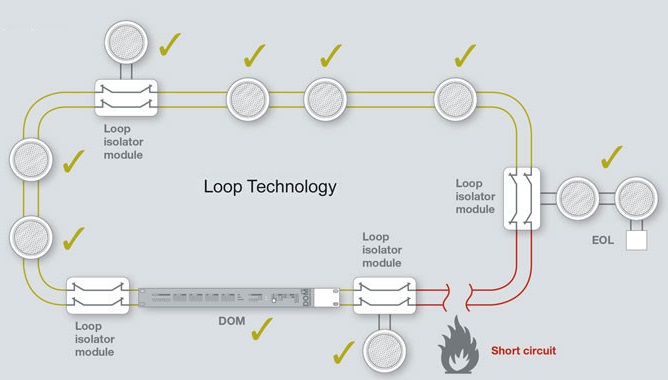
Some manufacturers of professional voice alarm systems and electro-acoustic emergency warning systems are currently working on loop technology for 100 V loudspeaker connections. Usually, loudspeakers are still connected to the voice alarm system through spur technology. If a spur circuit is interrupted, however, all loudspeakers after the wire breakage would fail. During a short circuit, the entire spur circuit fails. In order to minimize risk in the case of wire breakage and short circuit, A/B cabling is used for systems based on DIN VDE 0833-4 (security levels 2 and 3), with half of the loudspeakers in a room operating on different loudspeaker lines. Thus, in a wire-to-wire short circuit (wire breakage, short circuit or ground fault), half of the loudspeakers in the relevant area remain in operation. So if the alarms sound at half power, the sound level is reduced by 3 dB, as long as the loudspeakers are correctly arranged. This level decrease is permitted in accordance with DIN VDE 0833-4 standards. In contrast to fire detection technology, loop wiring technology itself has not yet been established as the standard in the area of voice alarm systems (VAS), because considerably higher power must be transmitted there.

International evacuation standards
The following is an extract from SANS10139. If you are doing phased or staged evacuation on the fire system, then the voice evacuation system will follow the same principles
“There are various circumstances in which a staged fire alarm arrangement may be appropriate. These include, but are not restricted to, the following:
a) In certain large or high-rise buildings, it might be desirable to evacuate first those areas closest to the fire and immediately above it; other areas are evacuated thereafter. A particular example of this arrangement, commonly used in high rise buildings, is known as phased evacuation; in this case, conventionally, the floor of fire origin, the floor immediately above (and, often, any below ground areas) are evacuated as a first phase. Thereafter, each subsequent phase involves evacuation of two floors at a time, until all floors are evacuated in a number of such phases. This arrangement enables the number and/or widths of stairways to be reduced; under these circumstances, it is important that no control is provided to evacuate the entire building in a single phase, as there will be insufficient stairway capacity for simultaneous evacuation of all occupants.
b) Phased evacuation is also sometimes used in other types of building, irrespective of whether there are reduced stairway capacities (e.g. leisure complexes, shopping centres and transportation terminals). In these cases, the initial phase of evacuation may be horizontal, into a place of relative safety within the building.
c) In hospitals, a system of ‘progressive horizontal evacuation’ is used, in which patients closest to a fire are moved horizontally to an adjacent fire compartment. In a large hospital, further evacuation might, again, involve only horizontal movement, without the need for more difficult vertical evacuation.”

Despite all of the evidence reporting the greatly increased response times and improved evacuation, installations of VAS are still relatively low. For general applications in larger projects such as arenas, shopping malls and high-rise buildings, VAS installations are steadily increasing; for smaller buildings it is still fairly uncommon.

A VAS has to work when needed (especially and specifically during an emergency) and is, therefore, fully monitored at all times. Furthermore, the system is backed up by batteries which are fully charged and checked constantly; this will ensure that during a mains power failure, the system will continue to operate. Each voice alarm system is designed and built specifically for each project; typically, no two systems are identical.

A standard system built using today’s state-of-the-art technology in accordance with DIN VDE 0833-4 or EN 60849, an A/B or simple cabling in spur technology is sufficient, depending on the application. Though loop technology requires additional isolator modules, they initially create additional costs. However, at second glance the entire system can be significantly less expensive, with cost savings in other places. So, depending on the application, cost-intensive E30 cabling can be partially avoided.

In regard to building ordinances, DIN VDE 0833-4 is not specified for required voice alarm systems in section 7.10.3. This may be waived for loop wiring systems of otherwise functional integrity, if it is guaranteed that forward and return lines are routed in separate cables, and that these cables are laid out separately in buildings with fire protection technology. In addition, it must be ensured that the intended function of the VAS is not affected by a single failure in these loop wiring systems. That might be the case in the technology described here.

It is a sad state of affairs that our current building regulations in South Africa do not specifically request the requirement for voice evacuation systems, leaving the door open to omit these systems as a cost saving exercise, overlooking the safety benefit of these systems and putting the lives of people who occupy the buildings in jeopardy.

Benefits of a VAS
• Clear, spoken instructions to people during an emergency event.
• Selectable pre-recorded messages.
• Microphone priority handling.
• Full control during the evacuation of a building/phased evacuation: area-by-area, floor-by-floor, multiple areas/ floors all at once – whichever is most appropriate for the situation and layout of the building.
• Supports dynamic issuing of instructions and routing of persons away from danger through clear communication.
• Battery-backed: the system will continue to operate even in the event of a mains power failure.
• Ability to cancel false alarms and announce all clear messages.
• Ambient noise sensing: broadcasts will still be heard regardless if the background noise levels increase (the VA system can automatically adjust the volume of the broadcast).

• Day-to-day advantages: public information announcements, background music (gain revenue via advertisement injection and more).


Sunday, March 3, 2019

Recent Fire in Bangladesh Reminds Put Safety First

Recent Fire in Bangladesh Reminds Put Safety First

It happens on Bangladesh or Barlin or India it always tragic – it remained us “Safety First”. NFPA was saddened to learn of the recent tragic fire that swept through Dhaka, Bangladesh claiming the lives of nearly 70 people and injuring scores more. While a specific cause for what started the fire has yet to be determined, we do know that the intensity and spread of the fire stems from the storage of chemicals in the midst of the mixed-use part of the old city combining residences, shops, and unfortunately, chemical storage warehouses. (We don’t know specifically what chemicals were involved, but news accounts have mentioned flammable gas, flammable or combustible liquids like solvents or similar volatile materials, and have alluded to perfumes, cosmetics, and simple combustibles.)

What is particularly troubling is that a similar incident occurred in Dhaka in 2010. While the event was followed by a government effort to prohibit chemical storage in the city center, the effort was not sustained because it lacked a commitment of all involved parties tasked with protecting people and property. Such collaboration is at the root of what NFPA calls the Fire & Life Safety Ecosystem, a concept that helps guide all affected stakeholders through the process for identifying fire, life safety, electrical, and related hazards, and creating solutions to manage such hazards. Right now, this safety system is broken.
Take the 2010 incident in Bangladesh. While the process began with government recognition of the hazard, it needed more than just a push from government to build the framework. By way of example, according to the Ecosystem concept, full adherence to the codes and the referenced standards within would provide the process for storing chemicals in designated areas away from the public; an informed and skilled workforce would better be able to identify and respond to dangerous actions (i.e. the movement of stored chemicals from a once designated separate place back to residential areas); and an informed public would be more vocal and diligent in encouraging change in the name of safety. 
We are reminded that what we have seen with this incident in Bangladesh has happened elsewhere in the world:  In the U.S. in 2013, an ammonium nitrate fertilizer plant explosion killed 15 people; in China in 2016, a fire and explosions devastated a warehouse area storing chemicals and killing 170 people. In each of these incidents, the governments’ ill informed decisions related to zoning and compliance with existing fire and life safety codes and standards contributed to the devastating outcomes.  
So, what do the standards say about chemical storage and how they could have applied in Dhaka? NFPA standards, such as NFPA 1, NFPA 30, and NFPA 400, would approach these hazards by ensuring the following:
•    Identifying the hazard classification and characteristics
•    Identifying the types of containers used for storage
•    Limiting the quantities of the more volatile materials
•    Using construction to manage some of the storage (separate buildings or structures for certain materials to keep them segregated from incompatible materials) and enforcing separation distances from other structures, people and public areas
In the days to come, additional facts about this recent incident in Bangladesh will come to light. As we learn more, let it be a reminder that change can and should take root not just in Bangladesh but across the world. And while there is no single solution to fire and life safety, we believe that engaging in a full safety systems approach, as illustrated in the Fire & Life Safety Ecosystem concept, will get us closer to solving the world’s fire problem.  
At NFPA, we continue our focus on the entire safety system, working with professionals around the globe in support of the development and use of the Ecosystem concept in their countries and according to local cultures. By working together, recommitting to, and promoting this full system of fire prevention, protection and education, we can help save lives and reduce loss.
আগুন, যার একটাই গুণ- কেবল জ্বালাতেই জানে। এবং এই অগ্নিক্ষুধা এতোটাই একপাক্ষিক ঘটনা যে, জান-মাল সহ কিছুই আর অবশিষ্ট রাখে না। প্রতিবছর আমাদের দেশে আকস্মিক অগ্নিকাণ্ডে কী পরিমাণ জান-মালের ক্ষতি হয় তার কোন পরিসংখ্যানমূলক তথ্য হাতের কাছে না থাকলেও নাগরিক জীবনে এর ভয়াবহতা ও ভিকটিম হিসেবে আমাদের অসহায়তার অন্ত নেই। বাসা-বাড়ি অফিস-আদালত থেকে শুরু করে মার্কেট-বহুতল ভবন যান-বাহন ইত্যাদি প্রায় সকল ক্ষেত্রে অগ্নি নির্বাপক সিস্টেমের অভাব বা অপ্রতুলতা এবং আমাদের ভয়ানক অজ্ঞতা-অসচেতনতার কারণেযেকোন সময় যেকোন স্থানে যে কেউ এই আগ্রাসী অগ্নিকাণ্ডের দুঃখজনক ট্র্যাজেডির অসহায় শিকার হয়ে যাওয়া বিচিত্র নয়। গ্রামে-গঞ্জে বা ছোটখাটো শহরগুলোতে হুট করে বাইরে খোলা জায়গায় বেরিয়ে পড়ে প্রাণ বাঁচানোর ছোট্ট সুযোগটুকু পাওয়া গেলেও খাঁচাবদ্ধ নাগরিক জীবনে সেটাও সুদূরপরাহত বলেই মনে হয়। তাই প্রতিমুহূর্তের সমূহ আশঙ্কা আর সম্ভাব্য বিপদ মাথায় নিয়েই আমাদের নাগরিক জীবন।
ইদানিংকালে ঢাকার কিছু অগ্নিকাণ্ডের ঘটনা-উত্তর পরিস্থিতি থেকে আমাদের দুঃখজনক অভিজ্ঞতা হচ্ছে, আগুনে পুড়ে মরার চাইতে বহুগুণ বেশি মৃত্যু ঘটে হুড়োহুড়িতে পদপিষ্ঠ হয়ে। বিশেষ করে কিছু গার্মেন্টস ফ্যাক্টরির অনাকাঙ্ক্ষিত অগ্নিকাণ্ডের ঘটনায় আমরা তা লক্ষ্য করলাম। আবার নিমতলীর ভয়াবহ অগ্নিকাণ্ড যে আমাদেরই বালখিল্য অসতর্কতা ও অবিবেচনাপ্রসূত অসচেতনতার ফসল তাও বলার অপেক্ষা রাখে না। এতে করে আগুনের তীব্রতার চাইতেও আমাদের অজ্ঞতা-অসচেতনতাই অধিক তীব্র বলে অনুমিত হয়। এছাড়া বহুতল ভবনগুলোর অন্ধ-আবেগি নির্মাণশৈলিতে প্রয়োজনীয় বিল্ডিং কোড অমান্যের পাশাপাশি অত্যাবশ্যকীয় অগ্নি-নির্বাপক ব্যবস্থার শোচনীয় ঘাটতি বা অনুপস্থিতি, আমাদের রাষ্ট্রিয় ফায়ার সার্ভিস ও সিভিল ডিফেন্স সংস্থার যুগোপযোগী প্রয়োজনীয় ইকুইপম্যান্ট সার্ভিস না থাকা, বিশেষ করে তেরো তলার উপরে অগ্নিনির্বাপণে তাদের অসহায় অক্ষমতায় (যা এফ আর টাওয়ার অগ্নিকাণ্ডে লক্ষ্য করা গেছে) বহুতল ভবনশীর্ষবাসীদের স্রেফ অদৃষ্ট-নির্ভর হয়ে যাওয়া ইত্যাদি বিষয় আমাদের নাগরিক-যোগ্যতাকেই প্রশ্নের সম্মুখীন করে তুলেছে। এমতাবস্থায় আগুন সম্পর্কে আমাদের সতর্ক সচেতনতার কোন বিকল্প চোখে পড়ে না। একটু সচেতন হলেই আমরা অনেক বড় বড় দুর্ঘটনা থেকে পরিত্রান পেয়ে যেতে পারি। অনেক ভয়ঙ্কর ট্র্যাজেডিরও দুর্ভাগা সাক্ষি হতে হয় না আমাদের। আসুন না, আমরা সে চেষ্টাটুকুই করতে পারি কিনা দেখি।

২০১৯ সালের ২০ ফেব্রুয়ারি বাংলাদেশের ঢাকায় চকবাজারে অগ্নিকাণ্ডের ঘটনা ঘটে সেখানে একটি গ্যাস সিলিন্ডারের বিস্ফোরণ হতে সৃষ্ট আগুন পার্শ্ববর্তী ভবনসমূহে ছড়িয়ে পড়ে এবং বৈদ্যুতিক ট্রান্সমিটার বিস্ফোরিত হয়ে এলাকাটি বিদ্যুৎ-সংযোগবিচ্ছিন্ন হয়ে যায় দমকল বাহিনী পাঁচ ঘণ্টার চেষ্টায় আগুন নিয়ন্ত্রণে আনতে সক্ষম হলেও (সরকারি হিসাব মতে) ততক্ষণে ঘটনাস্থলে অগ্নিদগ্ধ হয়ে ৭৮ জন মারা যান

কারণ

শিল্প মন্ত্রণালয়ের প্রাথমিক তদন্ত প্রতিবেদনে বলা হয়, ২০ ফেব্রুয়ারি রাত ১০টা ৩৮ মিনিটে রাজধানীর পুরান ঢাকার চকবাজার থানার চুড়িহাট্টা মসজিদ সংলগ্ন আসগর লেন, নবকুমার দত্ত রোড হায়দার বক্স লেনের মিলনস্থলে একটি প্রাইভেটকারের সিলিন্ডার বিস্ফোরণের মাধ্যমে অগ্নিকাণ্ডের সূত্রপাত হয় সেই আগুনে প্রাইভেটকারের কাছেই থাকা গ্যাস সিলিন্ডারবাহী একটি পিকআপের সিলিন্ডারসমূহও বিস্ফোরিত হয়; বিস্ফোরিত হয় পার্শ্ববর্তী খাবার হোটেলের গ্যাস সিলিন্ডার এবং রাস্তার বৈদ্যুতিক ট্রান্সমিটারও। পুরো এলাকা বিদ্যুৎ-বিচ্ছিন্ন হয়ে পড়ার মধ্যেই আগুন ছড়িয়ে পড়ে নিকটস্থ রাজ্জাক ভবন, হাজী ওয়াহিদ ম্যানশনসহ পাঁচটি ভবনে। হাজী ওয়াহেদ ম্যানশনে থাকা পারফিউমের গুদাম অন্যান্য দোকানে রাখা প্লাস্টিক গ্রেনুলারসমূহ দাহ্য পদার্থ হিসেবে আগুন ছড়িয়ে পড়তে সাহায্য করে আরেকটি ব্যাখ্যা অনুসারে, মোড়ে থাকা একটি বিদ্যুতের ট্রান্সফরমার থেকে আগুনের সূত্রপাত হয় পরবর্তীতে বিস্ফোরক পরিদপ্তরের করা তদন্ত প্রতিবেদনে বলা হয়, ওয়াহেদ ম্যানশনের দ্বিতীয় তলায় রাখা সুগন্ধির ক্যানগুলো থেকে কোনো কারণে বাতাসে বিস্ফোরক মিশ্রণ তৈরি হয়েছিল। বৈদ্যুতিক স্ফুলিঙ্গ ওই মিশ্রণের সংস্পর্শে এসে বিস্ফোরণ ঘটে অগ্নিকাণ্ডের সূত্রপাত হয়। প্রতিবেদনটিতে সিলিন্ডার বিস্ফোরণে আগুনের সূত্রপাত হওয়ার বিপক্ষে যুক্তি তুলে ধরা হয়েছে

ঘটনাক্রম

ঘটনাস্থলে অগ্নিদগ্ধ গাড়ি ঘনবসতিপূর্ণ সরু গলিপথের পুরান ঢাকায় দ্রুত আগুন ছড়িয়ে পড়ে; নিকটস্থ এক কমিউনিটি সেন্টারে বিয়ে উপলক্ষে সড়ক ছিল জনসমাগমপূর্ণ। আগুনে পথচারী রিকশাযাত্রীরাসহ ভবনগুলোর বাসিন্দারা অগ্নিকাণ্ডের শিকার হন। এর মধ্যে দমকল বাহিনীর ১০টি ফায়ারস্টেশনের ৩৭টি ইউনিট অগ্নিনির্বাপনের কাজ শুরু করে; ৪টি হেলিকপ্টারের মাধ্যমে আগুনলাগা ভবনগুলোতে পানি ছিটানো হয়। রাত ৩টার দিকে আগুন মোটামুটি নিয়ন্ত্রণে আসে, তবে এরপরেও ছোটোখাটো বিস্ফোরণ হতে থাকে। পরদিন ২১ ফেব্রুয়ারী দুপুর ১টায় ১৫ ঘণ্টাব্যাপী অগ্নিনির্বাপণ অভিযান সমাপ্ত ঘোষণা করা হয়

হতাহত

দমকলবাহিনী ঘটনাস্থল থেকে ঢাকা মেডিকেল কলেজে ৭০টি লাশ প্রেরণ করে; আরো ১১টি লাশ বিভিন্নভাবে এসে পৌঁছায়। এছাড়া আহত অগ্নিদগ্ধ ৫২ জনের মধ্যে ৪১ জন প্রাথমিক চিকিৎসা নেন এবং ১১ জনকে হাসপাতালে ভর্তি করা হয় এবং হতাহতদের বেশির ভাগ লোক নোয়াখালি জেলার

ক্ষয়ক্ষতি

অগ্নিকাণ্ডে একাধিক হোটেল দোকানসহ পাঁচটি ভবন সম্পূর্ণ পুড়ে যায়। পুড়ে যাওয়া ওয়াহিদ ম্যানশন ধ্বসে পড়ার সম্ভাবনা জানান বুয়েটের প্রকৌশলীগণ এছাড়া ৪টি গাড়ি, ১৫টি মোটরবাইকসহ অনেকগুলো রিকশা, ভ্যান ঠেলাগাড়ি অগ্নিদগ্ধ হয়

প্রতিক্রিয়া 

অগ্নিকাণ্ডে হতাহতের ঘটনায় রাষ্ট্রপতি আবদুল হামিদ  প্রধানমন্ত্রী শেখ হাসিনা শোক প্রকাশ করেন এবং প্রধানমন্ত্রী উদ্ধার কার্যের তত্ত্বাবধান করেন বলে জানান ঢাকা দক্ষিণ সিটি কর্পোরেশনের মেয়র সাঈদ খোকন বিরোধীদল বিএনপি অগ্নিকাণ্ডের জন্য 'সরকারের অব্যবস্থাপনা'কে দায়ী করে এবং ২৩ ফেব্রুয়ারী শোকদিবস পালনসহ দুদিনের কর্মসূচী ঘোষণা করে
অগ্নিকাণ্ডে হতাহতদের স্বজনদের তথ্য জানাতে বিশেষভাবে হটলাইন চালু করা হয়
অগ্নিকাণ্ডে আহতদের চিকিৎসার খরচ সরকার বহন করবে বলে জানান স্বাস্থ্যমন্ত্রী জাহিদ মালেক পাশাপাশি শ্রম মন্ত্রণালয় থেকে নিহত শ্রমিকদেরকে লক্ষ এবং আহতদেরকে ৫০ হাজার টাকা করে আর্থিক সহায়তা দেয়া হবে বলে জানানো হয়
মেয়র সাঈদ খোকন পুরান ঢাকায় আর কোনো রাসায়নিক গুদাম রাখতে দেয়া হবে না এবং কঠোর পদক্ষেপ নেয়া হবে বলে জানান পুলিশ মহাপরিদর্শক জাবেদ পাটোয়ারী জানান যে রাসায়নিক গুদাম সরাতে সংশ্লিষ্ট দপ্তরকে পুলিশ সহায়তা দিতে প্রস্তুত আছে তবে 'অর্থনৈতিক প্রবাহ' বজায় রাখতে পুরান ঢাকার রাসায়নিক ব্যবসা বন্ধ করা যাবে না বলে মন্তব্য করেন শিল্পমন্ত্রী নুরুল মজিদ মাহমুদ হুমায়ূন অগ্নিকাণ্ডের কারণ অনুসন্ধান, ক্ষয়ক্ষতি নিরূপণ ভবিষ্যতে অগ্নিকাণ্ড রোধে শিল্প মন্ত্রণালয়ের অধীনে ১২ সদস্যের একটি তদন্ত কমিটি গঠন করা হয় এবং একটি প্রাথমিক প্রতিবেদন জমা দেয়া হয়
২৫ ফেব্রুয়ারি, সোমবার এক দিনের রাষ্ট্রীয় শোক পালন করা হয়
আগুন দ্রুত প্রজ্জ্বলনশীল পদার্থের রাসায়নিক বিক্রিয়াবিশেষ। আগুন জ্বালানোর জন্য তিনটি উপাদানের প্রয়োজন পড়ে  - অক্সিজেন,  জ্বালানী এবং তাপ। জ্বালানী হিসেবে কাঠ, কয়লা, তৈল এবং অন্যান্য দাহ্য পদার্থ পরিবেশের সর্বত্র রয়েছে। একবার আগুন জ্বলতে শুরু করলে পরবর্তীতে এটি নিজেই তাপ উৎপাদনে সক্ষম। কখনো কখনো এটি নিজেই স্বয়ংক্রিয়ভাবে তাপ উৎপাদনের মাধ্যমে জ্বলতে শুরু করে।

সাবধানতার সাথে আগুন না জ্বালালে এটি মারাত্মক প্রতিক্রিয়া ও প্রভাব সৃষ্টি করে। একবার আগুন নিয়ন্ত্রণের বাইরে চলে গেলে এটি ১৭,৪০০বর্গ কিলোমিটার এলাকাব্যাপী ক্ষতিসাধন করতে সক্ষম যা মার্কিন যুক্তরাষ্ট্রের নিউইয়র্ক শহরের সমান। বনাঞ্চলের পুরোটাই ধ্বংস হয়ে যেতে পারে যদি তা নিয়ন্ত্রণে রাখা না যায়। প্রতিবছর ইউরোপের বনাঞ্চলের একটি বড় অংশ ধ্বংস হয়ে যায় অগ্নিজনিত কারণে। এ ধরনের ঘটনাগুলো মূলতঃ গ্রীষ্মকালেই সংঘটিত হয়ে থাকে। অগ্নিনির্বাপককর্মী বা প্রশিক্ষিত জনগোষ্ঠী আকস্মিকভাবে সৃষ্ট অগ্নিকাণ্ড বন্ধের জন্য প্রাণান্তকর চেষ্টা চালায় কিংবা আগুনকে নিয়ন্ত্রণে রাখতে সচেষ্ট হয়।
আগুনকে তিনটি পৃথক উপায়ে নির্বাপণ করা সম্ভব। নিচের তিনটির যে-কোন একটি সহায়ক উপাদানকে দূরে সরিয়ে রাখার মাধ্যমে তা সম্ভবপর -
·         যদি আগুনকে তার সাহায্যকারী জ্বালানী এবং অপরাপর জ্বালানীকে দূরে রাখা যায়, তাহলে আগুন জ্বলবে না।
·         অক্সিজেন প্রত্যাহারের মাধ্যমে আগুন নিভানো সম্ভব যা শ্বাসরোধকারী আগুন নামে পরিচিত। আগুন খালি জায়গায় জ্বলতে পারে না অথবা এটি কার্বন ডাইঅক্সাইড দ্বারা আবৃত থাকাবস্থায় জ্বলে না।
·         তাপ শক্তিকে দূরে সরিয়ে রাখার মাধ্যমে আগুনকে নিয়ন্ত্রণে রাখা যায়। সবচেয়ে প্রধান ও সাধারণ উপায় হচ্ছে জল ব্যবহার করা যা আগুনকে বিস্তৃত ঘটাতে সাহায্য করে না।
কিন্তু ম্যাগণেসিয়ামজনিত শিখার সাহায্যে সৃষ্ট কিছু আগুনের সর্বাগ্রাসী বিচ্ছুরণকে আটকানো যায় না। এটি কার্বন ডাইঅক্সাইড, নাইট্রোজেন এবং অন্যান্য অগ্নিনিবারক সহায়ক যৌগকেও পুড়িয়ে ফেলতে সক্ষম।
আগুন নেভানো বা নিয়ন্ত্রণে রাখার জন্য ব্যবহৃত যন্ত্রকে অগ্নিনির্বাপক যন্ত্র বলা হয়। অতি প্রচলিত অগ্নিনির্বাপক যন্ত্রগুলোতে সাধারণত সিলিন্ডারে উচ্চচাপে রক্ষিত তরল কার্বন ডাই-অক্সাইড নজ্‌ল লিয়ে স্প্রে আকারে বের করে আগুন নেভানো হয়। আর CO2.অগ্নি নির্বাপক এক্সটিইংগুইসারঃ যন্ত্রে ধরার জন্য হাতলে একটা বিশেষ জায়গা আছে যেহেতু এই গ্যাস অনেক ঠাণ্ডা তাই অন্য জায়গায় ধরে রাখতে পারবেন না ।
অগ্নিনির্বাপক যন্ত্র / এক্সটিইংগুইসারঃ পরিচালনার সাধারণ ধাপসমূহ হলঃ
1.   সেফটি পিনটি টানুন।
2.   নিরাপদ দুরত্বে থেকে (অন্তত ছয় ফুট দুরে) নজলটি আগুনের মূলে তাক করুন।
3.   হাত দিয়ে নজলটি চাপুন।
4.   অগ্নিনির্বাপক যন্ত্রটি আগুনের দিকে তাক করে একপাশ থেকে আরেক পাশে নাড়ান।
বিভিন্ন ধরনের আগুনের জন্য বিভিন্ন রকমের অগ্নিনির্বাপক যন্ত্র রয়েছে। ভুল রকমের অগ্নিনির্বাপক যন্ত্র ব্যবহারের ফলে আগুন আরও বাড়তে পারে তাই সঠিক ধরনের অগ্নিনির্বাপক যন্ত্র ব্যবহার করা উচিত। আগুন নিভানোর কাজে ব্যবহৃত যে সিলিন্ডারগুলো দেখি তা মুলত ৩ টি ভাগে বিভক্ত।যথাঃ
1) ডিসিপি (DCP)
2) সিওটু(CO2) এবং
3) ফোম জাতীয়(Fome)।
এবার আসুন দেখি কোন এক্সটিইংগুইসারঃ সিলিন্ডার কোন ধরনের আগুনে ব্যবহার করা হয়।
ডিসিপি পুরনাঙ্গ রূপ হচ্ছে ড্রাই ক্যামিকেল পাউডার। এটা সাধারনত কাপড়, পাট, কাঠ, এবং শুকনো কঠিন পদার্থের আগুন নেভানোর জন্য ব্যবহার করা হয়। এই সিলিন্ডার দামি ও সূক্ষ্ম মেশিনের আগুন নেভানোর কাজে ব্যবহার হলে আগুন নিভবে কিন্তু মেশিনগুলো পুনারায় ব্যবহার না করা যেতে পারে। কারন পাউডারের জন্য মেশিনের অভ্যন্তরীণ দামি ও সূক্ষ্ম যন্তারংশ চিরতরে ক্ষতি হতে পারে।
সিওটু (CO2) মানে সহজ বাংলায় কার্বন ডাই অক্সসাইড যেটা দামি ও সূক্ষ্ম মেশিনারিজের আগুন নেভানোর জন্য ব্যবহৃত হয়।ফোম জাতীয় সিলিন্ডার রাসায়নিক, গ্যাসের আগুন নেভানোর কাজে ব্যবহৃত হয়।বাসায় ব্যবহার করার জন্য সিওটু হচ্ছে আদর্শ সিলিন্দার।কারন বাসায় দামি মেশিন যেমন আছে আবার কমদামি শুকনো জিনিসও আছে।
ডিসিপি (DCP) এক্সটিইংগুইসার সিলিন্ডার চেনার উপায় হল এর এই সিলিন্ডারের হজ পাইপটির( সাথে লাগোয়া কালো রঙের নল) পাউডার বেরোনোর দিকটি বেশী বড় থাকবেনা তবে আগার তুলনায় সামান্য চওড়া থাকবে। ডিসিপির নলের মাথা তুলনামূলক চওড়া থাকবে। সংক্ষেপে ৩ টি সিলিন্ডারের ব্যবহার লিখছি।
ক)ডিসিপি (DCP) ফায়ার এক্সটিইংগুইসারঃ এই ফায়ার এক্সটিইংগুইসারের সাহায্যে সাধারনত কঠিন পদার্থের আগুন নিভানো যায়।তবে বিদুতের আগুন,গ্যাসের আগুন ও ছোট ধরনের তেলের আগুনও নিভানো যায়।কার্যক্ষমতার উপর নির্ভর করে।
খ) সিওটু(CO2) ফায়ার এক্সটিইংগুইসারঃ এই ধরনের এক্সটিইংগুইসারের সাহায্যে সাধারনত বৈদ্যুতিক আগুন নিভানো হয়।
গ)ফোম টাইপ ফায়ার এক্সটিইংগুইসারঃ এই ফায়ার এক্সটিইংগুইসারের সাহায্যে সাধারনত তরল পদার্থের আগুন নেভানো হয়। এগুলো আবার দুই ধরনের হয় গ্যাস কার্টিজ টাইপ এবং প্রেসার টাইপ।
প্রতিটি প্রতিষ্ঠান বা সুউউচ্চ বিল্ডিং গুলিতে মাসে একবার নিয়মিত মহড়া হতে হবে । কিছু আগুনের মহড়া হবে না জানিয়ে আর কিছু রাতের বেলায় । মহড়ার লক্ষ্য বিপদের সময় আপনার মাথা কাজ না করলেও শুধু অভ্যাসের বলে কিভাবে সঠিক কাজ করে বের হয়ে আসবেন । যেমন আগুন ছড়িয়ে গেলে কিভাবে দ্রুত বের হয়ে আসতে হবে । কিভাবে ধোঁয়ার নীচ দিয়ে আসবেন ইত্যাদি ।দয়া করে মনে রাখবেনঃ বেরিয়ে যান, বাইরে থাকুন, ফায়ার সার্ভিসকে খরব দিন।

সকল গার্মেন্টস তৈরী ফ্যাক্টরীর একটি অটোমেটিক ফায়ার এলার্ম সিস্টেম থাকতে হবে যা স্বমন্বয় হবে তিনিটি ডিভাইসের মাধ্যমে:
ক) স্মোক ডিটেক্টর (Smoke Detector)
খ) হিট ডিটেক্টর (Heat Detector) এবং
গ) স্প্রিংকলার ওয়াটার ফ্লো ডিভাইস।
স্মোক ডিটেকশন এবং ফায়ার এলার্ম সিস্টেম কোথায় লাগাতে হবেঃ ২৩ মিটার বা ৭৫ ফিট উচ্চতার নিচে যে কোনো বিল্ডিংএ ফায়ার এলার্ম সিস্টেম প্রতিস্থাপন করতে হবে। ২৩ মিটার বা ৭৫ ফিট উচ্চতার অধিক হলে স্প্রিংকলার এবং রশ্মি ডিটেক্টর(Beam Detector) লাগাতে হবে।
স্মোক ডিটেকশন এবং ফায়ার এলার্ম সিস্টেম প্রতিস্থাপনের নিয়মঃ একজন সাপ্লায়ার কে অবশ্যই বি.এন.বি.সি সেকশন-০৪ এর ৪.৪ এবং এন.এফ.পি.এ ৭২ এর গাইড লাইন অনুযায়ি এই সিস্টেম প্রতিস্থাপন করতে হবে।
স্মোক ডিটেকশন এবং ফায়ার এলার্ম সিস্টেম ডিজাইনঃ এন.এফ.পি.এ ৭২ (NFPA 72 2019) এর গাইড লাইন অনুযায়ি একজন সাপ্লায়ার কে এর ডিজাইন তৈরী করতে হবে। একর্ড ফলোআপ অডিট এর সময় এন.এফ.পি.এ ৭২গাইড লাইন অনুযায়ি সম্পূর্ণ সিস্টেম প্রতিস্থাপন করা হয়েছে কিনা তা চেক করা হবে। 

তবে একর্ড এর নিয়মানুযায়ি, স্মোক ডিটেকশন এবং ফায়ার এলার্ম সিস্টেম ডিজাইন প্রতিস্থাপনের পূর্বে একর্ড টিম কর্তৃক পরিক্ষা-নিরীক্ষা করে তাদের কর্তৃক অনুমোদন পূর্বক কারখানায় প্রতিস্থাপনের পরার্মশ দেওয়া হয়েছে। অতএব, কোনো সাপ্লায়ারের কাছে কার্যাদেশ প্রদানের পূর্বে একর্ড কর্তৃক ডিজাইন অনুমোদন পূর্বক তা প্রদান করা উচিত।
উল্লেখ্য যে, স্মোক ডিটেকশন এবং ফায়ার এলার্ম টি কোনো একটি সম্পূর্ণ বিল্ডিং এ একসাথে শুনা জেতে হবে, যেন সকল ফ্লোরের লোকজন একসাথে বিল্ডিং থেকে বেরিয়ে যেতে পারে। আংশিক এলার্ম নোটিফিকেশন কোনোভাবেই গ্রহনযোগ্য নয় এবং উক্ত সিস্টেম থাকলে তা একর্ড নিয়মানুযায়ি পূণরায় প্রতিস্থাপন করতে হবে।


স্মোক ডিটেকশন এবং ফায়ার এলার্ম সিস্টেম প্রতিস্থাপনের পরবর্তী করনীয়ঃ সাপ্লায়ার কর্তৃক প্রতিস্থাপনের পর সম্পূর্ণ সিস্টেম টি এন.এফ.পি.এ ৭২ (NFPA 72 2019) গাইড লাইন অনুযায়ি চেক করতে হবে এবং উক্ত গাইড লাইন অনুযায়ি চেকিং এর সম্পূর্ণ ডকুমেন্টস একর্ড কর্তৃপক্ষের নিকট প্রদান করতে হবে। উক্ত চেকিং ডকুমেন্টস এর উপর ভিত্তি করে একর্ড পূণরায় সিস্টেম টির ফাইনাল টেস্টিং এবং অডিট সম্পন্ন করবে। যদি উক্ত প্রক্রিয়ার কোথাও অসম্পূর্ণ থাকে, তবে একর্ড অডিট ব্যর্থ তথা পুরো পদ্ধতি টি না জেনে স্মোক ডিটেকশন এবং ফায়ার এলার্ম সিস্টেম প্রতিস্থাপনের কঠিন মাশুল দিতে হবে।

এন.এফ.পি.এ ৭২গাইড লাইন অনুযায়ি উক্ত স্মোক ডিটেকশন এবং ফায়ার এলার্ম সিস্টেমটি নিকটস্থ ফায়ার সার্ভিস স্টেশনের সাথে সরাসরি যোগাযোগ স্থাপন করা থাকতে হবে যেন কোনো ধরনের দূর্ঘটনা ঘটার সাথে সাথে নিকটস্থ ফায়ার সার্ভিস স্টেশন জানতে পারে।

কিন্তু যতদিন তা করা সম্ভব না হবে, একজন নিয়োজিত ব্যক্তি উক্ যোগাযোগ রক্ষার জন্য নির্ধারন করা থাকতে হবে। নিয়োজিত ব্যক্তির কর্তব্য স্থলে অবশ্যই সেন্ট্রাল ফায়ার/ স্মোক ইন্ডিকেটর থাকতে হবে।
অফিসের জন্য বা কলকারখানার জন্য প্রয়োজন হয় ইমারজেন্সি অ্যাকশন প্ল্যান। সহজে বের হওয়ার বিকল্প উপায়, ফায়ার ডোর ও আরও বাড়তি কিছু আগুন নেভানোর যন্ত্র যেমন: ফায়ার এক্সটিংগুইশার, স্মোক ডিটেক্টর, ফায়ার ডোর, হাইড্রেন্ট সিস্টেম (জল সরবরাহের উৎস), স্প্রিংকলার সিস্টেম (স্বয়ংক্রিয়ভাবে, অতিরিক্ত তাপমাত্রার উপস্থিতিতে স্প্রিংকলার ফেটে জল ছড়িয়ে আগুন নেভায়) ও হোজ বক্স (কাচের বাক্সে লাল প্যাঁচানো নল, যা যুক্ত থাকে হাইড্রেন্টের সঙ্গে। যে তলায় আগুন লাগবে, সেখানে কাচের বাক্স খুলে প্যাঁচানো নলটি ৫-১০ ফুট সামনে নিলেই স্বয়ংক্রিয়ভাবে জল বেরোতে থাকবে, আগুন নেভাবে) যন্ত্র ব্যবহারের ওপর প্রশিক্ষণের ব্যবস্থা ও নির্দিষ্ট সময় পরপর মহড়ার ব্যবস্থা করা উচিত।
আমরা সবাই আসলে আগুনকে চিনি কিন্ত খুব কম লোকই আগুন সম্পর্কে জানি ।
চেনা আর জানার ফারাকটা কিন্ত ক্ষেত্র বিশেষে বিস্তর। তাই দয়া করে আগুনকে জানুন ।
আজকে থেকেই হোক আপনার জানার চেষ্টা ।